The final assignment is due on November 20th. It's 2500 words, not including the bibliography. You need to do the following:
(1) Submit a 'draft' of your assignment through TurnItIn (see the last post) on October 31st.
(2) Run the final version of your assignment through TurnItIn around the 18th of November.
(3) Submit the final version of the Assignment, with the TurnItIn report attached to it, through AssignIT on November 20th.
There's an online guide to this assignment at:
http://www.unisanet.unisa.edu.au/learn/Learningconnection/?PATH=/Resources/la/Media+Literacies+(HUMS+1013)+-+Research+Essay+SP5-2009/&default=Welcome.htm
But keep in mind, that guide hasn't been updated recently. Follow the instructions in the course guide and in the tutes over anything you find at that URL.
Sunday, October 25, 2009

Sunday, October 18, 2009
Computer Room Tutorial
If you don't get to the computer room tutorial, you can do the following at home or in the library.
Computer Room Tutorial
Today’s tute is essentially an exercise in aggravating data entry. You’ll be doing three things:
(1) Logging in to TurnItIn. All you need to do with this today is login. Make sure you remember your password. We’ll go over the reason you’re doing this in next week’s tutorial.
(2) Doing the Student Evaluation of Teaching. This is an anonymous form giving me feedback on my teaching. The scores also affect my ability to get further tutoring work in the future. They are totally anonymous and, whilst I see your answers, I don’t see your name or any other identifying notes in the final report. I do value feedback on how I can teach this course better in the future.
(3) Doing the Course Evaluation Instrument. This is akin to the above, but the feedback is for the course coordinator (Jean) and lecturer (Kit). This is where you give feedback regarding things like the lectures, access to online course materials, the layout of the course information booklet etc.
(1) TurnItIn
(1) Go to your student email. You should have an email from TurnItIn. It will include your email address and a temporary password.
(2) Follow the prompts to login.
(3) Eventually you’ll get to a page that has “Assignment List” and “Your Portfolio” written up the top of it.
(4) There should be two ‘Assignments’ listed below. One will say “Final Assignment Media Literacies” and the other will say “Revision One”.
(5) On October 31st you need to upload a “Draft” of your Assignment. To do this, click on the little picture of the arrow next to ‘Revision One” and below ‘Your Portfolio”. Fill in the sections for your name and write your name plus the word ‘Draft’ under ‘Submission Title’. Then click “upload”.
(6) After uploading you’ll be redirected to a page that says “Submit paper”. Scroll down and click on ‘Submit’.
(7) In theory, at some point in the next 15 minutes to 24 hours you’ll get a report telling you whether you’ve plagiarised or not. It’ll appear as a little coloured line with a percent next to it. You need to log back in to TurnItIn to get this.
(8) For the final assignment, you need to follow all of the above steps, except submitting your final assignment under the “Final Assignment Media Literacies”.
(2) SET and (3) CEI
You should get an email asking you to answer and Student Evaluation of Teaching, or something similar. Follow the links.
Computer Room Tutorial
Today’s tute is essentially an exercise in aggravating data entry. You’ll be doing three things:
(1) Logging in to TurnItIn. All you need to do with this today is login. Make sure you remember your password. We’ll go over the reason you’re doing this in next week’s tutorial.
(2) Doing the Student Evaluation of Teaching. This is an anonymous form giving me feedback on my teaching. The scores also affect my ability to get further tutoring work in the future. They are totally anonymous and, whilst I see your answers, I don’t see your name or any other identifying notes in the final report. I do value feedback on how I can teach this course better in the future.
(3) Doing the Course Evaluation Instrument. This is akin to the above, but the feedback is for the course coordinator (Jean) and lecturer (Kit). This is where you give feedback regarding things like the lectures, access to online course materials, the layout of the course information booklet etc.
(1) TurnItIn
(1) Go to your student email. You should have an email from TurnItIn. It will include your email address and a temporary password.
(2) Follow the prompts to login.
(3) Eventually you’ll get to a page that has “Assignment List” and “Your Portfolio” written up the top of it.
(4) There should be two ‘Assignments’ listed below. One will say “Final Assignment Media Literacies” and the other will say “Revision One”.
(5) On October 31st you need to upload a “Draft” of your Assignment. To do this, click on the little picture of the arrow next to ‘Revision One” and below ‘Your Portfolio”. Fill in the sections for your name and write your name plus the word ‘Draft’ under ‘Submission Title’. Then click “upload”.
(6) After uploading you’ll be redirected to a page that says “Submit paper”. Scroll down and click on ‘Submit’.
(7) In theory, at some point in the next 15 minutes to 24 hours you’ll get a report telling you whether you’ve plagiarised or not. It’ll appear as a little coloured line with a percent next to it. You need to log back in to TurnItIn to get this.
(8) For the final assignment, you need to follow all of the above steps, except submitting your final assignment under the “Final Assignment Media Literacies”.
(2) SET and (3) CEI
You should get an email asking you to answer and Student Evaluation of Teaching, or something similar. Follow the links.
Sunday, October 11, 2009
Overview of the Course So Far
Let’s consider some examples of media and think about what the course has gone over so far. A couple of weeks ago we looked at a bunch of ads and asked a few questions:
What signs do you see?
What discourses (or themes) are evident?
What’s the story being told?
How does that relate to a particular ideology or hegemony?
So let’s really quickly look at an ad: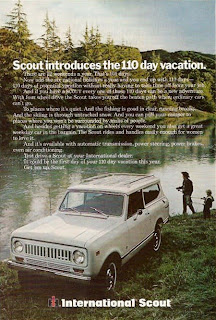
Now let’s look at another ad.
What happened here?
Chevy Tahoe hired some advertising company that had heard about ‘mash ups’ and put the material required to make an ad for them online, tried to go all Web 2.0 and get some ‘user generated content’. They put the footage online, the music and let people rearrange them and ad their own captions and sound tracks. They got a whole pile of these, most of which are now on YouTube.
This is emblematic of a shift in how people think about advertising, but also in how we think about media.
In The Sociology of Culture, Raymond Williams writes:
"…whatever purposes cultural practice may serve, its means of production are unarguably material. Indeed, instead of starting from the misleading contrast between ‘material’ and ‘cultural’, we have to define two areas for analysis: first, the relations between those material means and the social forms within which they are used… and, second, the relations between these material means and social forms and the specific (artistic) forms which are a manifest cultural production."
What does that mean? It means media is about signs and communication, but its also about how those signs reach the reader. What Chevy fails to recognise is that its not the 1950s, and media isn’t one-way anymore.
Let’s think about another example. On top of thinking about the signs and discourses, think about how those signs and discourses move from the producer (the publisher, writer, editor, etc) to the consumer (the reader).

The Gutenberg Bible
What made this revolutionary?
Let’s consider two other examples, both taken from Chris Anderson’s book ‘The Long Tail’.
http://www.youtube.com/watch?v=BtHadAigayc
Anderson cites these guys as having produced the fastest selling album of all time, with 2.4million copies in the first week, released in Jan 2000. They were put together by a music mogal called Lou Pearlman at Sony, but for their second album, No Strings Attached, they shifted to a subsidiary called Jive to get more street cred.
Anderson says these guys benefited from a particular media structure that controlled how media products reached an audience. He explains this at length in the Long Tail, but consider it in brief. Here's a picture of the Long Tail"
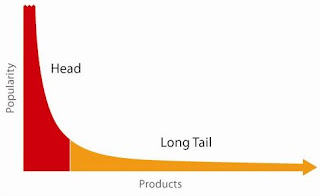
When this piece of music came out, it relied on retail outlets, radio and MTV to attract an audience. With limited space, and the necessity of a huge market to cover the cost of accessing that space, only the 'hits' were commercially viable. Guys like Pearlman knew how to work that structure and make hits.
According to Anderson, their success will never be matched because it’s no longer possible for record companies to control their audience in the same way. Anderson talks about the shift towards the ‘long tail’, whereby people buy more niche markets. He uses the example of The Lonely Island.
He says these guys are an example of people becoming successful not because they had a record company that knew how to run a good publicity campaign, but because they slowly built a grassroots reputation through things like YouTube. There’s some other famous examples of recent years.
MC Spandex, who got almost a million hits and world wide fame for a low budget parody music video clip:
Another ‘famous’ example is Tim and Eric. Only watch this if you’re feeling brave. These guys have a well established cult following, but as you can tell from the below clip they’d never fit into the old media structure:
What changes have happened to allow us to go from the boy bands of the late 90s and early 2000s, selling millions of copies, to things like The Lonely Island becoming popular?
Further Reading
The point is that mediums are as important as the meanings they produce. Some useful theory for looking at mediums:
Raymond Williams, The Sociology of Culture.
Hillel Schwartz, The Culture of the Copy.
Marshall McLuhan, The Essential McLuhan.
Andy Greenwald, Nothing Feels Good: Punk Rock, Teenagers and Emo.
Tara Brabazon, From Revolution to Revelation.
Steven Roger Fischer, A History of Reading.
Asa Briggs and Peter Burke, A Social History of the Media.
What signs do you see?
What discourses (or themes) are evident?
What’s the story being told?
How does that relate to a particular ideology or hegemony?
So let’s really quickly look at an ad:

Now let’s look at another ad.
What happened here?
Chevy Tahoe hired some advertising company that had heard about ‘mash ups’ and put the material required to make an ad for them online, tried to go all Web 2.0 and get some ‘user generated content’. They put the footage online, the music and let people rearrange them and ad their own captions and sound tracks. They got a whole pile of these, most of which are now on YouTube.
This is emblematic of a shift in how people think about advertising, but also in how we think about media.
In The Sociology of Culture, Raymond Williams writes:
"…whatever purposes cultural practice may serve, its means of production are unarguably material. Indeed, instead of starting from the misleading contrast between ‘material’ and ‘cultural’, we have to define two areas for analysis: first, the relations between those material means and the social forms within which they are used… and, second, the relations between these material means and social forms and the specific (artistic) forms which are a manifest cultural production."
What does that mean? It means media is about signs and communication, but its also about how those signs reach the reader. What Chevy fails to recognise is that its not the 1950s, and media isn’t one-way anymore.
Let’s think about another example. On top of thinking about the signs and discourses, think about how those signs and discourses move from the producer (the publisher, writer, editor, etc) to the consumer (the reader).

The Gutenberg Bible
What made this revolutionary?
Let’s consider two other examples, both taken from Chris Anderson’s book ‘The Long Tail’.
http://www.youtube.com/watch?v=BtHadAigayc
Anderson cites these guys as having produced the fastest selling album of all time, with 2.4million copies in the first week, released in Jan 2000. They were put together by a music mogal called Lou Pearlman at Sony, but for their second album, No Strings Attached, they shifted to a subsidiary called Jive to get more street cred.
Anderson says these guys benefited from a particular media structure that controlled how media products reached an audience. He explains this at length in the Long Tail, but consider it in brief. Here's a picture of the Long Tail"

When this piece of music came out, it relied on retail outlets, radio and MTV to attract an audience. With limited space, and the necessity of a huge market to cover the cost of accessing that space, only the 'hits' were commercially viable. Guys like Pearlman knew how to work that structure and make hits.
According to Anderson, their success will never be matched because it’s no longer possible for record companies to control their audience in the same way. Anderson talks about the shift towards the ‘long tail’, whereby people buy more niche markets. He uses the example of The Lonely Island.
He says these guys are an example of people becoming successful not because they had a record company that knew how to run a good publicity campaign, but because they slowly built a grassroots reputation through things like YouTube. There’s some other famous examples of recent years.
MC Spandex, who got almost a million hits and world wide fame for a low budget parody music video clip:
Another ‘famous’ example is Tim and Eric. Only watch this if you’re feeling brave. These guys have a well established cult following, but as you can tell from the below clip they’d never fit into the old media structure:
What changes have happened to allow us to go from the boy bands of the late 90s and early 2000s, selling millions of copies, to things like The Lonely Island becoming popular?
Further Reading
The point is that mediums are as important as the meanings they produce. Some useful theory for looking at mediums:
Raymond Williams, The Sociology of Culture.
Hillel Schwartz, The Culture of the Copy.
Marshall McLuhan, The Essential McLuhan.
Andy Greenwald, Nothing Feels Good: Punk Rock, Teenagers and Emo.
Tara Brabazon, From Revolution to Revelation.
Steven Roger Fischer, A History of Reading.
Asa Briggs and Peter Burke, A Social History of the Media.
Wednesday, September 16, 2009
Questions on Referencing and Annotated Bibliographies
In answer to some of the questions I’ve been receiving:
A General Overview of Annotated Bibliographies:
There’s an online guide to Annotated Bibliographies on the library website at:
http://www.unisa.edu.au/ltu/students/study/referencing/bibliography.asp
A Guide to Referencing Using Harvard
There’s a decent guide to both bibliographies and referencing in-text available as a PDF through the library. Do a title search through the library catalogue for “Referencing Using the Harvard Author-Date System” and you should be able to find it.
Citing a Report
Follow the example of the ‘Government Periodical’ at the bottom of page 20 in your course guide. Basically, cite the following:
-Either the editors, author or organisation that produced the report
-The year
-The title
-Any serial or volume numbers
-The publisher (which might be the same organisation you’re using for the author’s name)
-The place of publication.
A General Overview of Annotated Bibliographies:
There’s an online guide to Annotated Bibliographies on the library website at:
http://www.unisa.edu.au/ltu/students/study/referencing/bibliography.asp
A Guide to Referencing Using Harvard
There’s a decent guide to both bibliographies and referencing in-text available as a PDF through the library. Do a title search through the library catalogue for “Referencing Using the Harvard Author-Date System” and you should be able to find it.
Citing a Report
Follow the example of the ‘Government Periodical’ at the bottom of page 20 in your course guide. Basically, cite the following:
-Either the editors, author or organisation that produced the report
-The year
-The title
-Any serial or volume numbers
-The publisher (which might be the same organisation you’re using for the author’s name)
-The place of publication.
Sunday, September 13, 2009
How I Would Do The Second Assignment
STEP ONE:
Pick a Topic
Try to pick a topic you’ll be willing to stick with for the final assignment. The point is that this assignment helps you do the readings for the final one.
Let’s say I opted to go for the ‘make your own question’ option. The main goal of the course is to get you thinking about the power relationships inherent to the act of human communication. That’s what media is about. So I’ve chosen the topic:
“How has the rise of Web 2.0 affected how we understand ‘subculture’?”
The question is about how a trend in media has impacted upon how people interact, particularly people within smaller scale, more cohesive communities, particularly those with a sense of ‘resistant’ or ‘countercultural’ politics. Thus, it fits into the general aims of the course perfectly.
STEP TWO:
Research
You need to find eight sources relevant to your topic, as per page 14 of the course guide. Here’s how I’d do it:
(a) Find Two Refereed Journal Articles
Go to the library website, click on databases, click on ‘search by subject’ and scroll down to ‘Media’. I’d probably use either ‘Communication and Mess Media Complete’ (which is run by EbscoHost) or ‘Communication Studies A Sage Full Text Collection) (run by Sage). Those are the largest. The second one is full text. MediaScan is run by Informit, which features more Australian content, and JSTOR is primarily older content. I’d avoid it, as I would Margaret Gee’s Australian Media Guide – which has a pretty haphazard search engine.
(b) Find two academic monographs.
An academic monograph is a book by one or more authors. You can tell it’s not an anthology because it will say ‘By So and So’ not ‘Edited’ or ‘Compiled by So and So’. You can find them through the library website. The best approach is to find a few things that look useful, jot down the Dewey decimal numbers and then browse through the stacks in the library.
(c) Find an academic anthology
This is pretty much the same process as above. You can’t actually search for an anthology. Find the Dewey numbers for the topic you’re looking for, then browse until you find something with ‘Edited by’ written on it. It’ll include a collection of work by numerous authors all on the same topic.
(d) Find a Report
This is probably the hardest thing to find. Start searching through Google. Look for government or industry groups that have an interest in the area you’re studying .Find their websites and look for things that say “Publications’ or “Research”. Again, it’s a matter of browsing. Some classic examples are:
Australian Policy Online (Note the section that says ‘Creative Economy’).
http://apo.org.au/
Australian Communication and Media Authority
http://www.acma.gov.au/
Australian Research Council’s Centre of Excellency in Creative Industries and Innovation
http://www.cci.edu.au/
Attorney General’s Website
http://www.ag.gov.au/
Office of Film and Literature Classification
http://www.oflc.gov.au/
Copyright Agency Limited
http://www.copyright.com.au/
Department of Broadband, Communications and the Digital Economy
http://www.dbcde.gov.au/
(e) Advertising or Other Primary Source
This one is easy. It can be anything relevant to your topic – from a magazine ad to something on YouTube to your own Facebook profile.
(f) Newspaper or Magazine Article
Find an article or report relative to your topic. You can use the databases for this. Both JSTOR and EbscoHost are heavily loaded with non-refereed, journalistic material. Alternately wade through whatever magazines or newspapers you’ve come across recently.
STEP THREE
You need to answer all four parts of question three (as outlined in the reader) for EVERY source. Let’s consider the question I made up in step one, and apply it to an academic anthology:
Gelder, Ken and Sarah Thornton (eds). 1997, The Subcultures Reader, Routledge, London.
As a compiled overview of the major works to impact upon subcultural studies, Gelder and Thornton’s reader shows clearly the impact of Birmingham School theory, with its focus on British influenced academics and repetitive references to the rise of punk. That said, this retains its worth as a comprehensive overview of the most widely referenced work on subculture prior to the turn of the century. By providing key excerpts from conventional cultural studies, it outlines the toolbox with which most researchers have approached subculture in the face of Web 2.0.
Pick a Topic
Try to pick a topic you’ll be willing to stick with for the final assignment. The point is that this assignment helps you do the readings for the final one.
Let’s say I opted to go for the ‘make your own question’ option. The main goal of the course is to get you thinking about the power relationships inherent to the act of human communication. That’s what media is about. So I’ve chosen the topic:
“How has the rise of Web 2.0 affected how we understand ‘subculture’?”
The question is about how a trend in media has impacted upon how people interact, particularly people within smaller scale, more cohesive communities, particularly those with a sense of ‘resistant’ or ‘countercultural’ politics. Thus, it fits into the general aims of the course perfectly.
STEP TWO:
Research
You need to find eight sources relevant to your topic, as per page 14 of the course guide. Here’s how I’d do it:
(a) Find Two Refereed Journal Articles
Go to the library website, click on databases, click on ‘search by subject’ and scroll down to ‘Media’. I’d probably use either ‘Communication and Mess Media Complete’ (which is run by EbscoHost) or ‘Communication Studies A Sage Full Text Collection) (run by Sage). Those are the largest. The second one is full text. MediaScan is run by Informit, which features more Australian content, and JSTOR is primarily older content. I’d avoid it, as I would Margaret Gee’s Australian Media Guide – which has a pretty haphazard search engine.
(b) Find two academic monographs.
An academic monograph is a book by one or more authors. You can tell it’s not an anthology because it will say ‘By So and So’ not ‘Edited’ or ‘Compiled by So and So’. You can find them through the library website. The best approach is to find a few things that look useful, jot down the Dewey decimal numbers and then browse through the stacks in the library.
(c) Find an academic anthology
This is pretty much the same process as above. You can’t actually search for an anthology. Find the Dewey numbers for the topic you’re looking for, then browse until you find something with ‘Edited by’ written on it. It’ll include a collection of work by numerous authors all on the same topic.
(d) Find a Report
This is probably the hardest thing to find. Start searching through Google. Look for government or industry groups that have an interest in the area you’re studying .Find their websites and look for things that say “Publications’ or “Research”. Again, it’s a matter of browsing. Some classic examples are:
Australian Policy Online (Note the section that says ‘Creative Economy’).
http://apo.org.au/
Australian Communication and Media Authority
http://www.acma.gov.au/
Australian Research Council’s Centre of Excellency in Creative Industries and Innovation
http://www.cci.edu.au/
Attorney General’s Website
http://www.ag.gov.au/
Office of Film and Literature Classification
http://www.oflc.gov.au/
Copyright Agency Limited
http://www.copyright.com.au/
Department of Broadband, Communications and the Digital Economy
http://www.dbcde.gov.au/
(e) Advertising or Other Primary Source
This one is easy. It can be anything relevant to your topic – from a magazine ad to something on YouTube to your own Facebook profile.
(f) Newspaper or Magazine Article
Find an article or report relative to your topic. You can use the databases for this. Both JSTOR and EbscoHost are heavily loaded with non-refereed, journalistic material. Alternately wade through whatever magazines or newspapers you’ve come across recently.
STEP THREE
You need to answer all four parts of question three (as outlined in the reader) for EVERY source. Let’s consider the question I made up in step one, and apply it to an academic anthology:
Gelder, Ken and Sarah Thornton (eds). 1997, The Subcultures Reader, Routledge, London.
As a compiled overview of the major works to impact upon subcultural studies, Gelder and Thornton’s reader shows clearly the impact of Birmingham School theory, with its focus on British influenced academics and repetitive references to the rise of punk. That said, this retains its worth as a comprehensive overview of the most widely referenced work on subculture prior to the turn of the century. By providing key excerpts from conventional cultural studies, it outlines the toolbox with which most researchers have approached subculture in the face of Web 2.0.
Wednesday, August 19, 2009
How I Would Prepare for this Assignment
Keep in mind, there are no right and wrong answers with this test. I do not have a sheet saying that you must give specific answers. What I’m looking for is your ability to analyze, unpack and give an appraisal of how a piece of advertising works.
Before the Test:
-First off, do the readings, particularly the week three and four readings. If you’ve done them properly, this assignment will make a lot more sense. If you haven’t done them, I’d estimate your chance of failing goes up 50%.
-If you’re nervous about it, look at the test questions and apply them to some ads. Talk it over with other people, talk about advertising and think about what the ads are doing.
-Familiarize yourself with the key concepts. Again, this involves doing the readings and looking at the definitions I’ve put up online.
-Remember that what I’m looking for is your ability to think critically and analyze a piece of advertising. As long as I can see that you can look at an ad and see that it's doing more than simply presenting you with a product, you’ll probably pass.
Once You Get The Test Paper and See the Example:
(1) Look for the Signs. Look at everything in the ad and take note of everything you can see. If it was me, I’d bring in some note paper and write it down. This isn’t tricky – just look at the ad and write everything you see.
(2) Think about the ‘discourses’ involved. If you find the term confusing, look at this way: What themes do you see?
(3) Think about how those themes tie the signs together to create a ‘myth’ or story.
(4) Think about what that story says about the world – what is it trying to make you think, whose interests is it working for? What is it implying is good or bad? With that in mind, you should be able to pick the ideologies behind it.
Here's some examples:


Keep in mind, there are no right and wrong answers with this test. I do not have a sheet saying that you must give specific answers. What I’m looking for is your ability to analyze, unpack and give an appraisal of how a piece of advertising works.
Before the Test:
-First off, do the readings, particularly the week three and four readings. If you’ve done them properly, this assignment will make a lot more sense. If you haven’t done them, I’d estimate your chance of failing goes up 50%.
-If you’re nervous about it, look at the test questions and apply them to some ads. Talk it over with other people, talk about advertising and think about what the ads are doing.
-Familiarize yourself with the key concepts. Again, this involves doing the readings and looking at the definitions I’ve put up online.
-Remember that what I’m looking for is your ability to think critically and analyze a piece of advertising. As long as I can see that you can look at an ad and see that it's doing more than simply presenting you with a product, you’ll probably pass.
Once You Get The Test Paper and See the Example:
(1) Look for the Signs. Look at everything in the ad and take note of everything you can see. If it was me, I’d bring in some note paper and write it down. This isn’t tricky – just look at the ad and write everything you see.
(2) Think about the ‘discourses’ involved. If you find the term confusing, look at this way: What themes do you see?
(3) Think about how those themes tie the signs together to create a ‘myth’ or story.
(4) Think about what that story says about the world – what is it trying to make you think, whose interests is it working for? What is it implying is good or bad? With that in mind, you should be able to pick the ideologies behind it.
Here's some examples:


First Assignment Questions
Question One: 5 Points
How could hegemony be said to be operating in this text In answering, suggest the ideologies or dominant interests whose value system underpins the text?
The question is asking you to locate and discuss how the concept of hegemony is at work within the text and what ideology/ideologies this hegemony is related to. As such, you need to relate your response to both of these concepts. In order to answer this question, consider:
-What specific beliefs and ideas are presented in the text?
-How does the text construct a particular perspective, viewpoint or belief on the issue that is being ‘correct’ or ‘dominant’?
-How does the text convince you to accept a particular viewpoint or perspective as being the correct one?
Question Two: 4 Points
Identify the key discourses at work in this text.
This question is asking you to identify what particular discourses are used within the text, and thus which ideologies are present and at work within the text. As such, consider:
-What language and imagery is used within the text? Is this language or imagery specific to a particular genre/institution/media form?
-How do these discourses work to create stories and ideals that underpin the dominant ideologies presented within the text?
Question Three: 6 Points
Offer preferred, negotiated and oppositional readings of this text.
For this question, you need to provide a reading of each type. Consider:
-How can I read this text in a way that accepts both the message and the belief supporting it?
-How can I read this text in a way that, although it might reject the message, still accepts the beliefs and social structures that gave rise to it?
-How can I read this text in a way that rejects both the beliefs inherent to the text and the social structure that gave rise to them?
How could hegemony be said to be operating in this text In answering, suggest the ideologies or dominant interests whose value system underpins the text?
The question is asking you to locate and discuss how the concept of hegemony is at work within the text and what ideology/ideologies this hegemony is related to. As such, you need to relate your response to both of these concepts. In order to answer this question, consider:
-What specific beliefs and ideas are presented in the text?
-How does the text construct a particular perspective, viewpoint or belief on the issue that is being ‘correct’ or ‘dominant’?
-How does the text convince you to accept a particular viewpoint or perspective as being the correct one?
Question Two: 4 Points
Identify the key discourses at work in this text.
This question is asking you to identify what particular discourses are used within the text, and thus which ideologies are present and at work within the text. As such, consider:
-What language and imagery is used within the text? Is this language or imagery specific to a particular genre/institution/media form?
-How do these discourses work to create stories and ideals that underpin the dominant ideologies presented within the text?
Question Three: 6 Points
Offer preferred, negotiated and oppositional readings of this text.
For this question, you need to provide a reading of each type. Consider:
-How can I read this text in a way that accepts both the message and the belief supporting it?
-How can I read this text in a way that, although it might reject the message, still accepts the beliefs and social structures that gave rise to it?
-How can I read this text in a way that rejects both the beliefs inherent to the text and the social structure that gave rise to them?
Subscribe to:
Posts (Atom)